
Backpack Exchange EU: How Regulated Perpetual Futures Are Reshaping Trader Choice in Europe in 2026

The European derivatives landscape has undergone a noticeable shift by 2026, driven by tighter regulation, improved transparency, and the emergence of exchanges such as Backpack Exchange EU. Traders are no longer choosing between access and compliance — they now expect both. Regulated perpetual futures, once seen as a grey-area product in Europe, are becoming structured instruments aligned with MiCA and local financial frameworks. This evolution is changing how traders assess risk, liquidity, and long-term viability when selecting where to trade.
Regulatory Frameworks and Their Direct Impact on Perpetual Futures
One of the most significant developments shaping trading decisions in Europe is the implementation of the Markets in Crypto-Assets (MiCA) regulation. By 2026, MiCA has established clearer rules around derivatives, custody, and exchange operations. For perpetual futures, this means stricter requirements around leverage caps, margin transparency, and user protection mechanisms. Platforms operating within the EU must now demonstrate compliance not only technically, but also legally.
Backpack Exchange EU represents a new generation of exchanges built with regulation in mind from the outset. Instead of retrofitting compliance after launch, it integrates regulatory standards into its core architecture. This includes real-time risk monitoring, segregated client funds, and verifiable reporting systems. For traders, this reduces counterparty risk — a critical concern following multiple exchange failures earlier in the decade.
Another important shift is the standardisation of disclosure. Traders now receive clearer information about funding rates, liquidation thresholds, and position risks. This reduces reliance on guesswork or opaque fee structures. As a result, decision-making becomes more data-driven, aligning crypto derivatives more closely with traditional financial instruments.
Why Compliance Is Becoming a Competitive Advantage
In previous years, many traders prioritised high leverage and minimal restrictions, often turning to offshore exchanges. However, the environment in 2026 tells a different story. Compliance has become a differentiating factor, particularly for professional traders and institutional participants entering the market.
Regulated environments provide predictability. Traders can operate knowing that rules are enforced consistently, dispute mechanisms exist, and sudden policy changes are less likely. Backpack Exchange EU leverages this trust factor, offering a framework where legal clarity supports trading strategies rather than limiting them.
Additionally, regulatory alignment opens access to banking infrastructure and fiat on-ramps. This reduces friction when moving capital in and out of trading accounts. For many European users, this convenience outweighs the previously attractive but risky alternatives offered by unregulated venues.
Changes in Trader Behaviour and Risk Management Strategies
The availability of regulated perpetual futures has led to a noticeable shift in how traders approach risk. In earlier cycles, aggressive leverage was common, often without a full understanding of liquidation dynamics. By 2026, leverage is more controlled, and traders are increasingly focused on sustainability rather than short-term gains.
Exchanges like Backpack Exchange EU contribute to this shift by implementing built-in safeguards. These include dynamic margin requirements, circuit breakers during extreme volatility, and clearer liquidation pathways. Such features encourage traders to plan positions more carefully, rather than relying on high-risk exposure.
Education also plays a role. Regulated exchanges are expected to provide accessible explanations of complex instruments. This has resulted in more informed users who understand funding mechanisms, mark prices, and the implications of holding positions over time. The result is a more mature trading environment across the EU.
The Role of Transparency in Strategic Decision-Making
Transparency has become a central element in trading strategy development. With better access to data, traders can evaluate not only price movements but also structural factors such as liquidity depth and funding rate stability. This reduces uncertainty, especially during periods of market stress.
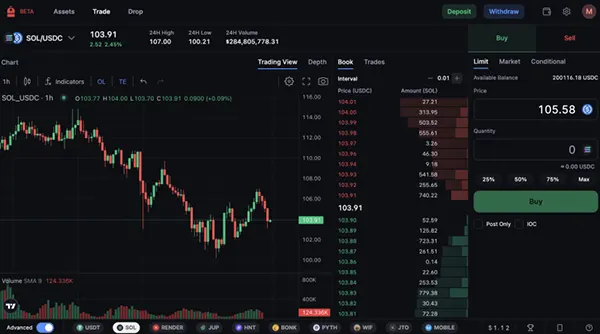
Backpack Exchange EU emphasises transparent order books and verifiable trade execution. For traders, this means fewer concerns about hidden liquidity or unfair matching practices. It also allows for more accurate backtesting of strategies, which is essential for algorithmic and systematic trading approaches.
Another outcome is improved portfolio diversification. Traders are more willing to allocate capital across multiple instruments when they trust the infrastructure. This reduces overexposure to a single asset or strategy and aligns crypto trading more closely with established financial risk management principles.
Infrastructure, Liquidity, and the Future of EU-Based Exchanges
Infrastructure has become a deciding factor in exchange selection. By 2026, European traders expect high-performance matching engines, low latency execution, and consistent uptime. Backpack Exchange EU positions itself within this expectation by combining regulatory compliance with institutional-grade technology.
Liquidity, once concentrated on a handful of global platforms, is gradually becoming more distributed. Regulated EU exchanges are attracting market makers due to legal clarity and reduced operational risk. This leads to tighter spreads and more stable pricing for perpetual futures contracts.
Another key development is interoperability. Exchanges are increasingly integrating with custodians, payment providers, and analytics tools. This creates a broader ecosystem where trading is not isolated but connected to portfolio management and reporting systems. For European traders, this integration simplifies workflows and improves efficiency.
What Traders Should Expect Beyond 2026
Looking ahead, the trajectory suggests further alignment between crypto derivatives and traditional financial markets. Regulatory frameworks are likely to evolve, but the foundation established by MiCA provides a stable base. Exchanges that adapt early, such as Backpack Exchange EU, are better positioned to retain user trust.
Innovation will continue, particularly in areas such as cross-margining, multi-asset collateral, and advanced risk engines. However, these features will need to operate within regulatory boundaries, ensuring that innovation does not compromise user protection.
For traders, the key takeaway is that exchange choice is no longer driven solely by features or fees. Legal certainty, infrastructure quality, and transparency now play an equally important role. This marks a structural change in the European trading environment, one that is likely to define the market for years to come.