
Bitunix Exchange: Can a New Crypto Exchange Compete in the Derivatives Market?
The cryptocurrency derivatives sector remained one of the fastest-growing segments of the digital asset industry throughout 2025 and into 2026. Trading volumes on futures and perpetual contracts continue to exceed spot market activity on many exchanges, while institutional participation has increased demand for lower latency, stronger liquidity and transparent risk management systems. Against this background, Bitunix has attempted to position itself as a rapidly expanding exchange focused on derivatives trading. The question is no longer whether new exchanges can enter the market, but whether they can realistically compete with established names that already dominate liquidity, infrastructure and trader trust.
How Bitunix Positioned Itself in the Competitive Derivatives Segment
Bitunix entered the market during a period when many traders were actively searching for alternatives to the largest exchanges. Regulatory pressure in several regions, combined with changing fee structures and tighter compliance requirements, created opportunities for newer companies to attract users through flexible onboarding, aggressive liquidity campaigns and simplified trading interfaces. Bitunix focused heavily on perpetual futures products, offering leverage trading across major cryptocurrencies and a growing number of altcoin pairs.
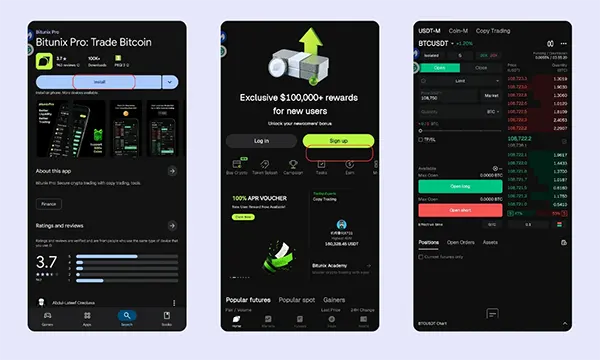
One of the exchange’s notable strategies has been its emphasis on accessibility for retail traders. The interface was designed to reduce the complexity often associated with derivatives terminals, while still including advanced charting tools, risk controls and copy trading functions. This approach reflects a broader trend in the market during 2025–2026, where exchanges increasingly attempted to combine professional-grade tools with simplified navigation for less experienced users.
Bitunix also invested in regional expansion rather than concentrating exclusively on the largest Western markets. The company increased visibility in Asia, Latin America and selected European jurisdictions where demand for crypto derivatives remained strong despite evolving regulation. In practice, this regional diversification can help newer exchanges avoid overdependence on a single regulatory environment, although it also creates additional compliance and operational challenges.
Liquidity and Trading Depth Remain the Biggest Challenge
For any derivatives exchange, liquidity is one of the most important competitive factors. Traders using futures contracts require tight spreads, rapid order execution and reliable order book depth, particularly during periods of market volatility. While Bitunix has expanded its trading volume since launch, it still operates in an environment dominated by exchanges with significantly larger liquidity pools and established market-making networks.
Large institutional traders generally prefer venues where they can execute high-volume positions without substantial slippage. This creates a difficult cycle for newer exchanges: attracting institutional liquidity often requires already having strong liquidity conditions in place. To address this, Bitunix has relied on incentive campaigns, market-maker partnerships and trading competitions to increase activity on selected pairs.
Another factor influencing liquidity quality is market stability during extreme price movements. The crypto sector experienced several high-volatility periods in 2025, particularly around Bitcoin ETF developments, macroeconomic interest rate decisions and renewed institutional inflows. Exchanges that maintained stable execution during these events strengthened trader confidence. For Bitunix, long-term competitiveness will depend not only on headline trading volumes but also on consistent performance under stressed market conditions.
Security, Regulation and User Trust in 2026
Trust remains one of the hardest elements for a new exchange to build. Since the collapse of several major crypto companies earlier in the decade, traders have become more cautious about custody, reserve transparency and operational risk. By 2026, proof-of-reserves reporting, third-party security audits and stronger account protection tools have become standard expectations rather than optional features.
Bitunix has publicly promoted its security infrastructure, including cold wallet storage, multi-signature systems and account-level protection mechanisms such as two-factor authentication and anti-phishing tools. However, in the current market environment, technical claims alone are rarely enough to establish credibility. Traders increasingly compare exchanges based on transparency practices, incident response history and the quality of communication during operational disruptions.
Regulatory positioning also plays a major role in exchange competitiveness. Jurisdictions across Europe, Asia and North America continued refining crypto regulations throughout 2025 and 2026, particularly regarding derivatives products and leverage limits. Exchanges operating internationally must balance compliance obligations with user accessibility. For Bitunix, future growth may depend on how effectively it adapts to licensing requirements without significantly reducing the flexibility that initially attracted traders.
Why Risk Management Tools Matter More Than Marketing
Many exchanges promote high leverage as a way to attract attention, but experienced traders increasingly focus on risk controls rather than maximum leverage ratios. Features such as adjustable margin modes, advanced stop-loss functionality, liquidation protection mechanisms and transparent funding rate calculations are now considered essential within the derivatives sector.
Bitunix has attempted to strengthen its competitive position by improving trader-oriented risk management systems. The exchange introduced multiple order types, real-time margin monitoring and position management tools designed to reduce the likelihood of forced liquidations during volatile periods. These additions align with broader industry changes, where traders became more selective after witnessing the risks associated with aggressive leverage during previous market cycles.
Educational support has also become more important across the industry. A significant portion of retail traders entering derivatives markets still underestimate the complexity of perpetual contracts and leveraged exposure. Exchanges that provide practical educational materials, transparent fee explanations and clear liquidation mechanics often achieve stronger long-term user retention than those relying purely on promotional campaigns.
Can Bitunix Realistically Compete With Established Exchanges?
The derivatives market is heavily concentrated among several dominant exchanges with extensive liquidity networks, institutional relationships and globally recognised brands. Competing directly against these companies is difficult because traders often prioritise execution reliability and capital efficiency over promotional incentives. Nevertheless, market history shows that crypto traders are willing to migrate to newer exchanges when they identify practical advantages or lose confidence in existing providers.
Bitunix does not necessarily need to overtake the largest exchanges to become commercially successful. In practice, many mid-sized exchanges operate sustainably by focusing on specific regional markets, selected trading products or specialised trader communities. If Bitunix continues strengthening liquidity, compliance standards and infrastructure stability, it could secure a stable position among secondary derivatives exchanges rather than attempting immediate dominance across the entire sector.
The exchange’s long-term prospects will depend on several interconnected factors: maintaining operational stability during volatile market conditions, adapting to global regulation, improving transparency standards and attracting professional liquidity providers. The crypto derivatives industry in 2026 remains highly competitive, but it is no longer closed to new participants. Exchanges capable of combining technical reliability with user trust still have opportunities to expand, even in a market dominated by larger competitors.
What Traders Should Evaluate Before Using Bitunix
Before selecting any derivatives exchange, traders should analyse more than promotional offers or leverage limits. Liquidity conditions, withdrawal reliability, security practices, transparency reports and historical system stability are far more important over the long term. Comparing these factors across multiple exchanges provides a more realistic picture of operational quality.
Users should also evaluate whether the exchange’s available products align with their trading strategy. Some traders prioritise low fees and high leverage, while others focus on advanced charting, API connectivity or deep liquidity for larger positions. Bitunix may appeal to traders seeking a simplified derivatives interface combined with a broad range of perpetual contracts, but professional participants will still compare it directly against established competitors before committing substantial capital.
As the crypto market continues evolving in 2026, competition between derivatives exchanges is likely to intensify further. Smaller exchanges can still gain relevance, although sustainable growth increasingly depends on transparency, infrastructure resilience and realistic risk management rather than aggressive expansion alone.