
Luno Exchange Review 2026: a straightforward choice for first crypto buys in Europe

When people in Europe buy cryptocurrency for the first time, the hardest part is often not choosing the coin — it’s moving money in and out safely, understanding the true cost of each purchase, and knowing what will happen once verification checks begin. Luno has built its reputation on doing the basics well: clean design, simple buying tools, and a fiat on-ramp that feels familiar to anyone used to online banking. In this 2026 review, I’ll focus on what matters in practice: how deposits and withdrawals work, what you actually pay (including spreads), how strict identity checks are, what limits apply, and whether Luno is a sensible place to start.
Deposits and withdrawals in Europe: what it looks like in real use
For European accounts verified in the “Europe” region, Luno’s core funding method is a bank transfer. The important detail here is cost: Luno lists bank transfer deposits as free for Europe, which means you can top up your EUR balance without an added deposit charge from Luno itself. That doesn’t automatically mean your bank won’t apply its own transfer fee, but on Luno’s side the deposit line is clear: no fee for a bank transfer deposit.
Withdrawals back to your bank account in Europe are also straightforward, but they are not free. Luno’s published withdrawal fee for a bank transfer in Europe is €0.30 per withdrawal. In practice, that makes Luno predictable for cashing out: you can estimate costs in advance and decide whether you prefer fewer larger withdrawals instead of many small ones.
If you want a simple mental model, Luno in Europe works like this: bank transfer in (free), bank transfer out (€0.30), and then your main cost is not the transfer — it’s the purchase price difference (spread) and the transaction fee for the buy/sell method you choose. That’s where beginners can either keep things simple or optimise a little with the right buying route.
Card purchases: faster funding, but the price is higher
Luno also supports instant card buying in some European countries, which is the option many beginners choose because it feels immediate and familiar. The trade-off is cost. For Europe, Luno lists an instant “buy with card” transaction cost of 3.5%. That’s a noticeable premium compared with bank funding + other purchase methods, so it’s best seen as a convenience feature rather than the default approach if you care about minimising fees.
Card buying also comes with hard limits. In Europe, Luno lists a cap of €1,000 per transaction and €5,000 per month for instant card buys. These limits are useful to know upfront because they can affect your plan if you’re trying to invest a larger amount quickly. Many first-time users start with card buys and then move to bank transfers once they’re comfortable and want lower overall costs.
One practical suggestion in 2026: if your goal is to “test” the app and make your first small purchase, the card route is fine as long as you understand that 3.5% is part of the price of speed. If you’re planning regular investing, bank transfers plus a lower-fee buying route can reduce costs noticeably over time.
Fees in 2026: transaction costs, spreads, and the difference between “simple buy” and transfer costs
In Europe, Luno’s published fees make a clear distinction between funding costs and buying/selling costs. Bank transfer deposits are free and bank transfer withdrawals cost €0.30, but your real “trading cost” depends on how you buy. If you buy from the Portfolio screen using Luno’s instant buying or selling option, the stated transaction cost is 1.5% for buying and 1.5% for selling. For a beginner, this is easy to understand: you get a clear percentage fee and you can complete a trade in seconds.
The next cost people often miss is the spread — the difference between the price you pay and the underlying market price at that moment. Luno’s own fee tables focus on transaction costs, but like most exchanges, the final price you receive can reflect spread, market volatility, liquidity, and the method you use. In real terms, the spread matters most on smaller trades and on instant-buy products, because convenience is priced in. If you are comparing Luno to other exchanges, you should always compare the “all-in” cost: transaction fee plus the price you actually get at checkout.
Another detail that matters for budgeting is limits. Luno lists per-transaction limits for instant buying/selling that vary by asset and currency, with EUR transactions shown from €1 up to €100,000 per transaction for Portfolio screen buying/selling in Europe. That’s more than enough for typical retail users, but the key is that different assets have different minimums and maximums, so it’s worth checking the exact limit for the coin you plan to buy before you transfer money in.
Sending crypto out of Luno: dynamic network fees and one notable exception
Many beginners treat an exchange as a long-term storage place, but others want to move funds to a hardware wallet once they’ve bought crypto. For Europe, Luno states that it charges a dynamic fee when you send cryptocurrency out. The logic is that blockchain fees change based on network demand, and Luno calculates the send fee using the up-to-date network cost plus operational processing costs. This is not unusual in 2026, and it’s the main reason why withdrawal costs can look different from one day to the next.
Luno also notes one exception: XRP has a fixed send fee of 0.03%. If you’re someone who uses XRP for transfers, that fixed rule makes costs easier to predict than dynamic fees on other chains. Luno’s general point is sensible: you see the exact fee before confirming, which is what you want if you’re learning how on-chain transfers work.
There is also a safety-oriented limit concept here. Luno explains that it may limit how much cryptocurrency you can send during rolling periods as part of anti-financial crime controls. For a new user, the key takeaway is simple: buying might be easy, but large or frequent withdrawals can trigger limits depending on risk controls and your account profile. If you plan to move large amounts to a personal wallet, doing verification properly and planning transfers in advance is the safer approach.
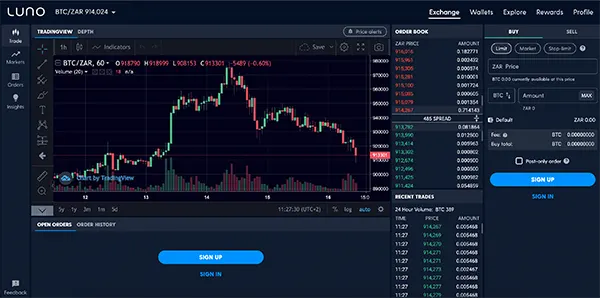
KYC, limits, and supported countries: who can use Luno and what to expect in 2026
Identity verification is no longer optional for mainstream exchanges, especially where fiat deposits are involved. Luno runs verification processes and, depending on your country, you may see different verification levels that control deposit and withdrawal limits. Luno’s own documentation explains that in some supported countries there are verification levels, each with its own deposit and withdrawal limits, and that these limits are calculated over rolling periods rather than calendar months. In plain English: if you hit a limit today, it doesn’t necessarily reset on the first day of next month — it rolls forward over time.
For beginners, this matters because the “I’ll verify later” approach often creates frustration at the worst moment — for example, when you want to withdraw to your bank account and discover you can’t until you submit additional documents. If your plan in 2026 involves regular deposits, higher volumes, or moving funds off-exchange, it’s better to complete verification early and treat the account like a financial service, not a casual app.
Supported regions are another area where Luno is different from many “global” exchanges. Luno states it is available in 40+ countries, but the supported resident sign-up list is relatively selective. According to Luno’s own published list, sign-ups are supported for residents in specific countries across Africa (Kenya, Nigeria, South Africa), Asia-Pacific (Australia, Indonesia, Malaysia), as well as the UK and Europe region accounts. It also maintains a list of unsupported countries and territories where the service is not available, and notes that users may be restricted from transacting if they travel to or relocate to unsupported regions.
Security and usability for first-time buyers: what Luno does well (and what to double-check)
Luno’s security approach in 2026 is built around the basics that matter: account protection features and safe custody practices. On its official safety information pages, Luno highlights tools such as two-factor authentication and modern authentication options like passkeys. These features reduce the risk of account takeover, which is still one of the most common ways people lose funds on mainstream exchanges.
From a usability standpoint, Luno’s biggest advantage is that it’s intentionally minimal. That can be a strength if you’re learning: fewer complex products, fewer screens, and a clearer “buy / sell / withdraw” journey. The downside is that advanced traders can find the asset selection and feature set limited compared with exchanges designed for high-frequency trading or broad altcoin access. If your goal is your first Bitcoin or Ethereum purchase, that limitation is not a real issue — it can actually reduce mistakes.
My practical checklist for beginners in 2026 is simple. First, set up strong authentication immediately (2FA and passkeys if available). Second, decide whether you’re comfortable keeping crypto on the exchange or whether you plan to move it to a personal wallet — and if so, learn how dynamic send fees work and test with a small transfer. Finally, be honest about your buying style: if you want quick and occasional purchases, the Portfolio screen and card buys are convenient, but if you’re investing regularly, bank transfers plus lower-fee buying routes can keep your long-term costs lower.